- BY kyle
- POSTED IN Latest Blogs
- WITH 0 COMMENTS
- PERMALINK
- STANDARD POST TYPE
Post-Monsoon Plumbing Checklist for Mesa Homeowners
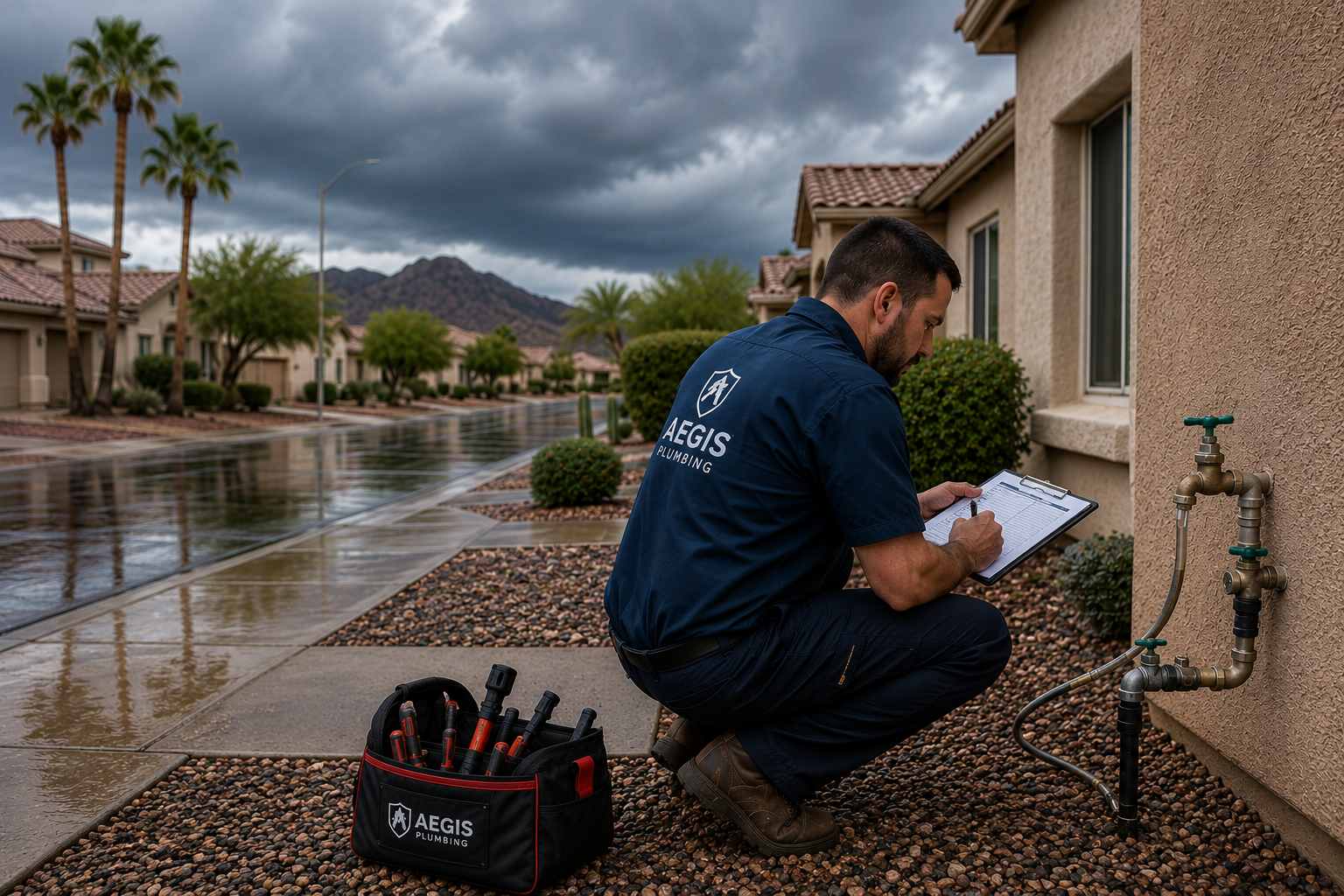
Arizona monsoon season brings thunderstorms, heavy rain, wind, blowing dust, and flash-flood potential to Mesa and the surrounding East Valley. A storm does not automatically mean your plumbing has been damaged. The useful question after significant weather is simpler: has anything about your plumbing changed?
According to the National Weather Service, Arizona’s official monsoon season runs from June 15 through September 30. For Mesa homeowners, that makes summer a good time to watch drains, outdoor plumbing, water pressure, water usage, and visible moisture more closely.
In This Guide
- Nine post-monsoon plumbing checks
- What different symptoms may mean
- How to use your water meter to check for a possible leak
- When a problem needs faster attention
- When to call the City of Mesa vs. a plumber
- Why preventative plumbing maintenance matters
Start With a Simple Post-Storm Walk-Through
The goal is not to diagnose every plumbing problem yourself. It is to identify anything that is behaving differently than it did before the storm so you can gather useful information before deciding whether service is needed.
Nine Plumbing Checks to Make After a Significant Monsoon Storm
1. Look for New or Unexplained Water
Walk through the home and check beneath sinks, around toilets, near appliances connected to water lines, and around visible plumbing connections.
- Damp cabinets or flooring
- Water stains
- Musty odors
- Unexplained puddles
- Moisture around plumbing connections
- The sound of running water when fixtures are off
Outside, distinguish normal rainwater from moisture that remains after nearby surfaces begin drying.
2. Inspect Outdoor Faucets and Hose Bibs
Check exterior faucets and hose bibs for visible leaks, loose connections, or damage. A drip that continues after the fixture is fully closed may point to a worn valve, seal, or connection.
Clear storm debris from around accessible outdoor plumbing so small leaks remain visible.
3. Check How Your Drains Are Performing
Run water through sinks, tubs, and showers and compare drainage with what is normal for your home.
- Standing water
- Slower-than-normal drainage
- Recurring clogs
- Unusual odors
- Gurgling
- Water backing up into another fixture
One slow fixture may be localized. Several slow or backing-up fixtures can point to a larger drainage issue.
4. Listen for Gurgling Drains or Toilets
Do not diagnose a drain problem from sound alone, but do not ignore a recurring sound that was not there before.
If multiple drains begin gurgling, draining slowly, or backing up, note which fixtures are affected before arranging a professional drain evaluation.
5. Check for Changes in Water Pressure
Use a few faucets and showers separately and compare their flow with what you normally experience.
- Sudden reduction in flow
- Unusually strong pressure
- Pressure that fluctuates
- One fixture behaving differently
- Several fixtures sharing the same change
The distinction between one fixture and multiple fixtures is useful because house-wide changes call for broader evaluation.
6. Inspect the Area Around Your Water Heater
Check visible connections and the floor around the unit for dripping water, new moisture, corrosion, rust, unusual sounds, or changes in hot-water performance.
Do not assume every puddle near the unit came from the storm. If water repeatedly appears around the heater, schedule a water heater inspection.
7. Test Toilets and Faucets
Flush toilets and run frequently used faucets to confirm they still behave normally.
- Toilets that continue running
- Weak or incomplete flushing
- New faucet drips
- Water around the base of a toilet
- Unexpected flow changes
8. Locate Your Main Water Shutoff Before You Need It
Confirm that you know where the main shutoff is, that the area is accessible, and that household members know how to reach it.
If you are unsure which valve controls the home’s water supply, ask a plumber to identify it during a maintenance visit rather than experimenting with unfamiliar valves.
9. Use Your Water Meter to Check for a Possible Hidden Leak
This is one of the most useful homeowner checks because it can show whether water is still moving when all known uses are off.
How to Use Your Water Meter to Check for a Possible Leak
If you suspect unexplained water use, follow a simple process before checking the meter.
If the meter continues registering water flow while those water uses are off, water may still be moving through the plumbing system and a leak could be present.
This does not tell you where the leak is located, but it gives you more useful information than guessing from a wet spot alone.
Post-Monsoon Plumbing Checklist for Mesa Homeowners
When Does a Plumbing Problem Need Faster Attention?
Call a Plumber Promptly
- Active leak on private property
- Several slow or backing-up fixtures
- Wastewater backup
- Significant house-wide pressure change
- Water repeatedly appearing around the water heater
- Unexplained water usage that persists
Contact City Utilities When Appropriate
For Mesa residents, municipal-system issues are different from plumbing problems on private property.
- Water leaking from the meter box
- Water surfacing in the street
- Municipal sewer overflow or backup
- Low or high water pressure involving the municipal system
A Local Mesa Tip: Don’t Assume Every Leak Is Your Plumber’s Responsibility
The City of Mesa generally handles leaks involving water meters and mains. Leaks on the customer side of the meter, including plumbing between the meter and building, are generally the property owner’s responsibility.
That distinction is especially useful after storms, when standing water can make the source of moisture less obvious.
Why Preventative Plumbing Maintenance Matters in Mesa
Preventative maintenance gives homeowners an opportunity to identify developing plumbing problems before they become more disruptive.
Aegis Plumbing’s preventative maintenance services can address faucets, toilets, hose bibs, water pressure, shutoff valves, water heaters, tankless water heaters, reverse osmosis systems, and other plumbing components.
The useful question after a monsoon is not simply, “Did the storm damage my plumbing?” A better question is, “Has anything about my plumbing changed?”
Monsoon Season Is a Reminder, Not the Only Time to Check Plumbing
Seasonal changes are useful reminders, but recurring clogs, unexplained water use, leaks, pressure changes, and failing fixtures deserve attention regardless of the month.
Monitor It
- One isolated gurgle with no other symptoms
- Temporary stormwater outside that dries normally
- A single fixture behaving slightly differently once
Schedule Service
- Recurring drainage problems
- Multiple affected fixtures
- Persistent leaks or moisture
- Unexplained water usage
- Pressure changes that do not resolve
About Aegis Plumbing
Aegis Plumbing provides residential plumbing services in Mesa, Arizona, including drain services, preventative maintenance, water heater service, bathroom and kitchen plumbing, and other home plumbing services.
The company emphasizes transparency, clear communication, and honest pricing, and provides a 10-year labor guarantee. Aegis Plumbing operates under Arizona ROC #338716.
Need Plumbing Service After a Mesa Monsoon?
If you notice an active leak, recurring drainage problems, multiple affected fixtures, unexplained water usage, a wastewater backup, significant pressure changes, or another plumbing problem that persists after the storm, Aegis Plumbing can help.
Call (480) 742-9937 Request Plumbing ServiceFrequently Asked Questions
Can Arizona monsoon storms damage plumbing?
A storm does not automatically mean the plumbing system has been damaged. After significant weather, look instead for specific changes such as unexplained water, abnormal drainage, backups, leaks, or pressure changes.
Why are multiple drains in my house suddenly slow?
When several fixtures develop drainage problems at about the same time, the issue may extend beyond an individual sink or shower drain. A professional drain evaluation can determine where the restriction or other problem is located.
How can Mesa homeowners check for a hidden water leak?
Turn off faucets, toilets, irrigation, washing machines, dishwashers, and other known water uses before checking the water meter. If the meter continues registering flow, water may still be moving through the plumbing system.
Who is responsible for a water leak in Mesa?
The City of Mesa generally repairs leaks involving water meters and mains. Leaks on the customer side of the meter, including plumbing between the meter and the building, are generally the customer’s responsibility.
Should I call the City of Mesa or a plumber for a leak?
Contact the City when water is leaking from the meter box or surfacing in the street. A leak on private property beyond the meter or involving household plumbing may require a plumber.
When should I call a plumber after a monsoon storm?
Consider professional service when you find an active leak, recurring drainage problems, multiple affected fixtures, unexplained water usage, wastewater backup, significant pressure changes, or another plumbing problem that persists after the storm.
Schedule Plumbing Service in Mesa
Aegis Plumbing serves Mesa and the surrounding East Valley with residential plumbing, drain service, preventative maintenance, water heater service, and general plumbing repairs.
Request Service